
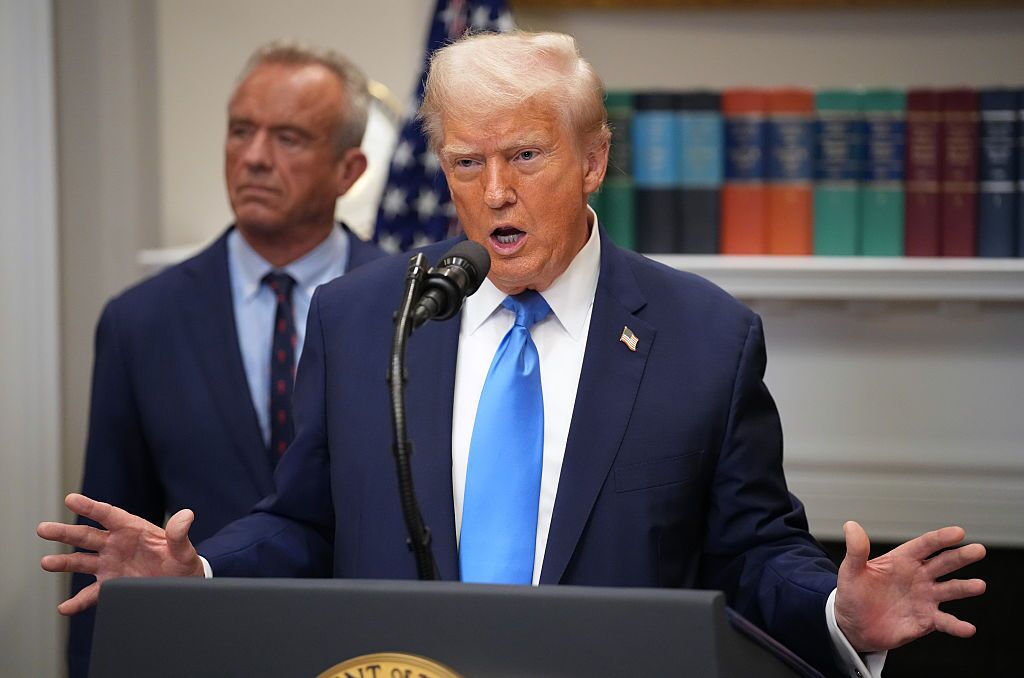
In a controversial announcement, U.S. President Donald Trump linked the common painkiller Tylenol — known scientifically as acetaminophen or paracetamol — to an increased risk of autism in children when taken during pregnancy. The claim, made during a high-profile press event, immediately Global Health Response stirred global debate because it goes against decades of scientific research. Major health organizations, including the World Health Organization (WHO) and European drug regulators, rejected the claim, saying there is no clear evidence connecting the drug to autism in children.
What Trump Said About Tylenol and Autism
During a press briefing, President Trump said that the U.S. Food and Drug Administration (FDA) would notify doctors about a supposed link between acetaminophen use in pregnancy and autism. He urged pregnant women to limit use of the drug unless medically necessary, especially for high fever. Trump also mentioned controversial ideas about vaccines that are not supported by scientific consensus.
Trump called autism a serious public health issue and suggested that common treatments and medications might contribute to its rise — remarks that quickly drew widespread attention and criticism.
International Health Agencies Push Back
World Health Organization (WHO)
The WHO strongly disputed Trump’s claim. Spokesperson Tarik Jašarević explained that while some small studies have explored possible links between acetaminophen and autism, the evidence remains inconsistent and far from conclusive. The WHO emphasized that no reliable scientific proof shows that taking acetaminophen during pregnancy causes autism.
The organization also reaffirmed that vaccines do not cause autism, a point backed by decades of global research and immunization efforts.
European Medicines Agency (EMA) and UK Regulators
The EMA and the United Kingdom’s top drug safety regulators confirmed that paracetamol (acetaminophen) is safe to use during pregnancy when taken correctly. They stated there is no new evidence that would change existing guidance, which recommends paracetamol as an effective way to treat pain and fever for pregnant women.
Other Global Responses
Health officials from Australia and Spain, among others, echoed these views. They said paracetamol remains a valuable option to manage common symptoms like pain and fever and that untreated pain or fever can be more harmful than the medicine itself.
Scientific Evidence and Autism Research
Many scientific experts and organizations stress that autism does not have a single known cause. Genetic and environmental factors both play roles, and increases in diagnosis over the years are largely attributed to wider awareness and better screening methods.
Large reviews of scientific studies — including research published in respected medical journals — show no clear causal link between prenatal acetaminophen use and autism. While some observational studies suggest weak associations, they do not prove that the medicine causes autism.
Medical groups argue that it is misleading to present uncertain research as established fact, and doing so could harm public trust in health guidance.
What This Means for Pregnant Women
Health authorities generally agree on these points:
- Paracetamol (acetaminophen) is widely used and typically considered safe for pain and fever in pregnancy when used as directed.
- Untreated fever or pain can pose risks for both mother and fetus.
- Pregnant women should always consult their healthcare provider before taking any medication.
Doctors recommend using the lowest effective dose for the shortest time necessary, and only when medically advised.
Frequently Asked Questions (FAQs)
Q1: Is there proof that acetaminophen causes autism?
No. Major health agencies, including the WHO, state there is no clear scientific evidence that acetaminophen during pregnancy causes autism.
Q2: Should pregnant women avoid Tylenol?
Current medical guidance does not recommend avoiding acetaminophen if needed for pain or fever, but it should be used only when necessary and as advised by a doctor.
Q3: Do vaccines cause autism?
No. Extensive research shows vaccines are safe and do not cause autism.
Q4: What should pregnant women do about medication?
Always consult a healthcare provider before taking any medicine, and follow professional guidance for safe use.
Q5: Why do autism diagnoses seem to be increasing?
Experts believe this is mostly due to improved diagnosis and broader definitions, not a dramatic rise in actual cases.
Conclusion
President Trump’s claim linking Tylenol use during pregnancy to autism sparked global debate and alarm. However, leading health organizations around the world have refuted the assertion, pointing out that the scientific evidence does not support such a link. Pregnant women and families are urged to seek guidance Global Health Response from qualified healthcare professionals rather than rely on unverified statements. Health decisions should be informed by rigorous research and trusted medical advice, not political rhetoric.



Leave a Reply